
Mold in your aircon: health risks and how to fix it
By Jacky Lee · Updated 2026-07-15
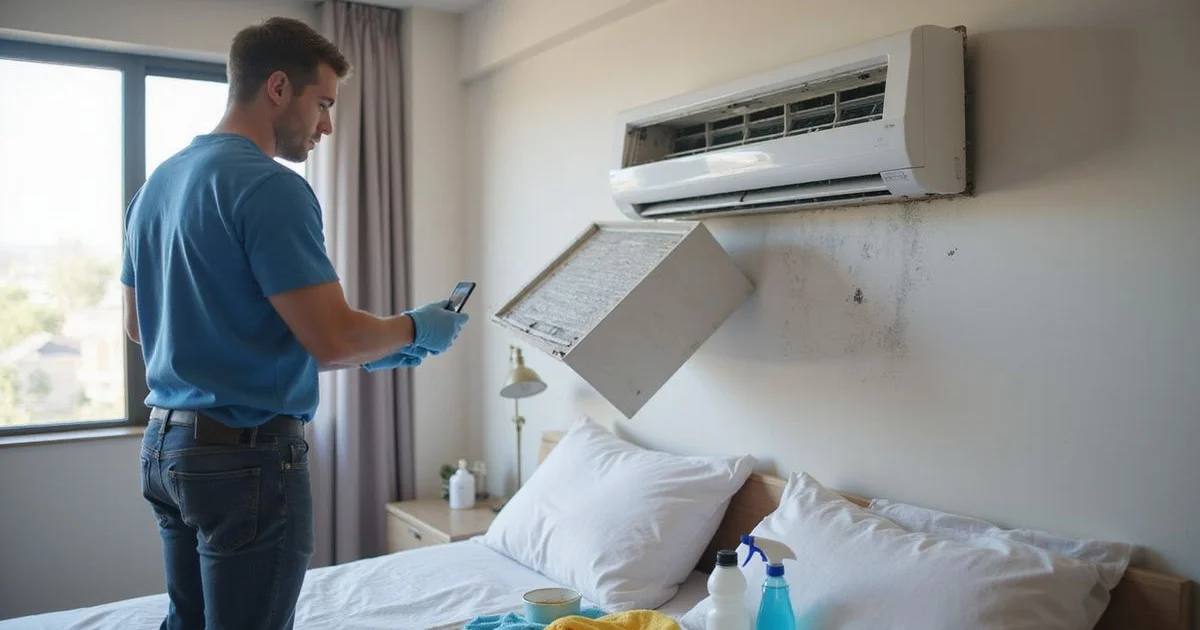
This is general information about aircon mold and its common effects, not medical advice. If you or someone in your household has ongoing respiratory symptoms, see a doctor.
Singapore’s year-round humidity is exactly the environment mold likes: warm, damp, and constantly circulating air through a coil that’s rarely completely dry. It’s one of the most common reasons an aircon starts smelling musty or a household member notices symptoms specifically when the unit is running.
Why aircon units grow mold in the first place
Every time an aircon cools air, moisture condenses on the coil. In a well-maintained unit, that moisture drains away and the coil dries out between cycles. Dust and grime on a dirty coil gives mold something to grow on, and a clogged drain means moisture sits longer than it should. Units that run almost continuously, common in Singapore’s climate, don’t get much of a dry-out period, which is part of why chemical washes and cleans matter more here than in cooler, drier climates. If you’re wondering whether nonstop use is a good idea in general, our guide on is it safe to run your aircon all day in Singapore looks at that question beyond just mold.
Signs your unit has a mold problem
- A musty or mildew-like smell when the unit switches on, especially after it’s been off for a while.
- Visible dark spots around the vents, fan blades, or filter.
- Symptoms like sneezing, a stuffy nose, or itchy eyes that seem to line up specifically with when the aircon is on.
- A smell that returns quickly after cleaning, which suggests mold is established deeper in the unit than surface cleaning reaches.
What this can mean for your health
For most people, mold exposure from a household aircon shows up as mild, allergy-like symptoms: sneezing, a stuffy or runny nose, itchy or watery eyes, or a scratchy throat. For people with asthma or other respiratory conditions, ongoing exposure can make symptoms worse. This is general information rather than a diagnosis, and if symptoms are persistent, severe, or you’re not sure what’s causing them, it’s worth seeing a doctor rather than assuming the aircon is the cause without confirming it.
Chemical wash vs chemical clean for mold
| Situation | What usually helps |
|---|---|
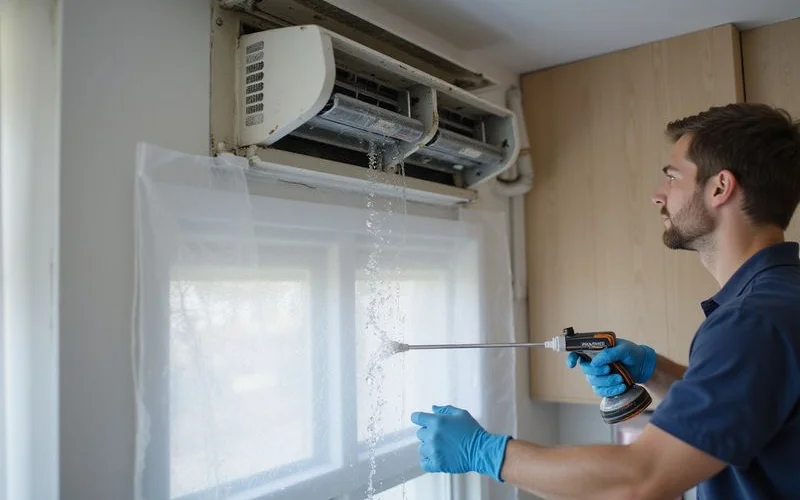
| Mild musty smell, no visible spots | A chemical wash, cleaning the coil and fan without dismantling the unit |
| Visible mold on vents or fan blades | A full chemical clean, dismantling the unit for a deeper clean of the coil, drain tray and casing |
| Smell returns quickly after a wash | Points to mold deeper in the system, worth booking a chemical clean instead |
| Recurring mold every few months | Worth checking the drain slope and filter cleaning schedule, not just repeating the wash |
Reviewers across contractors in our gas top-up and chemical cleaning category specifically flag chemical washes that identify and remove mold as a reason they book a contractor again, which lines up with how real this concern is across households here.
When it might not be mold
Not every musty smell or bout of sneezing near the aircon is mold. A dirty filter loaded with ordinary dust can smell stale without any mold present, and a blocked drain can cause a damp, stagnant smell on its own. If cleaning doesn’t resolve the smell or symptoms, it’s worth asking the technician to specifically check for mold on the coil and drain tray rather than assuming a standard wash will have caught it. Households with young children, older family members, or anyone with existing breathing conditions have more reason to stay on a consistent servicing schedule, since they’re generally more sensitive to indoor air quality issues.
Reducing how often it comes back
Regular servicing on a schedule matters more than reacting only once you notice a smell, since mold builds gradually and is easier to prevent than remove. Keep filters clean between full services, make sure the condensate drain has a proper slope and isn’t clogged, and if practical, give the unit occasional breaks rather than running it non-stop for weeks. None of this eliminates mold risk entirely in Singapore’s climate, but it slows the buildup considerably.
For how we score contractors on chemical wash and cleaning quality specifically, see our methodology page, and browse the home page for listed contractors in this category.
Frequently asked questions
- How do I know if my aircon has mold in it?
- A musty smell when the unit starts, visible black or dark green spots around the vents or fan blades, or a return of symptoms like sneezing and a stuffy nose specifically when the aircon is running are the common signs.
- Can mold in an aircon actually make me sick?
- For some people, yes. Mold exposure can trigger allergy-like symptoms such as sneezing, coughing, itchy eyes, or a stuffy nose, and can worsen symptoms for people with asthma or existing respiratory conditions. This is general information, not a medical diagnosis, so see a doctor if symptoms are persistent or severe.
- Does a chemical wash actually remove mold, or just mask the smell?
- A proper chemical wash cleans the coil and fan directly with a chemical solution, which removes mold rather than just covering the smell with fragrance. If the odour returns quickly after a wash, the mold may be deeper in the unit than a wash alone can reach, which points to a full chemical clean instead.
- How do I stop mold from coming back?
- Regular servicing on schedule, keeping filters clean, making sure the condensate drain isn't clogged, and letting the unit air out rather than running non-stop for weeks at a time all help reduce how fast mold builds up again.