
Commercial and industrial aircon servicing: what businesses should know
By Jacky Lee · Updated 2026-07-31
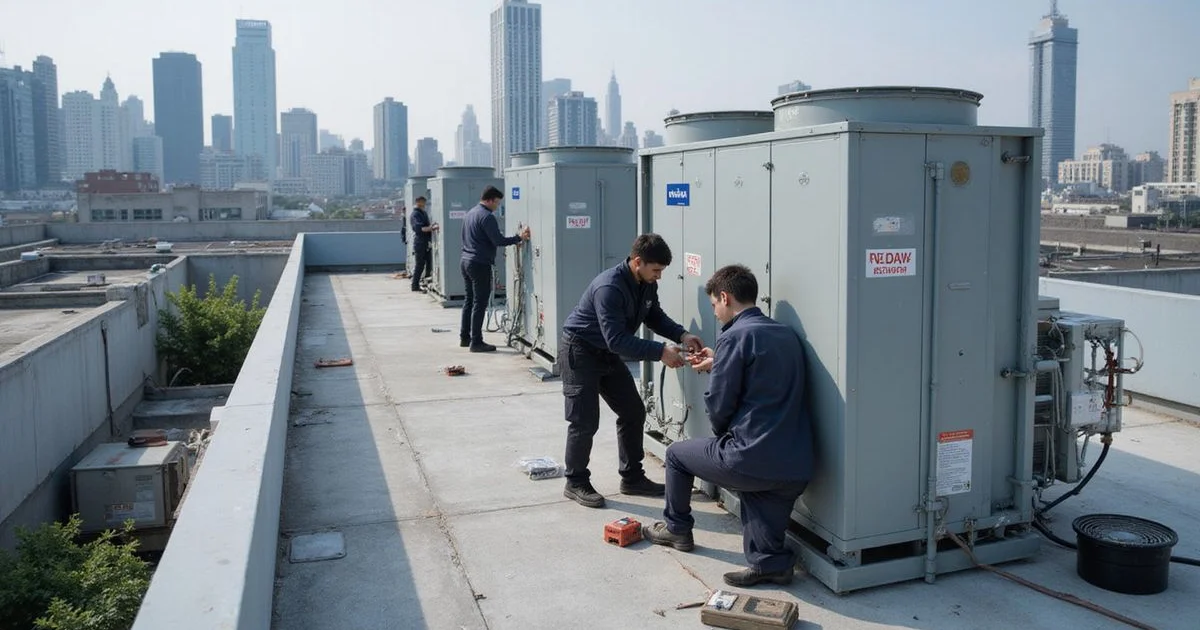
A retail unit, an office floor, and a warehouse all have different aircon needs, and all three are different again from the single-family home servicing most residential contractors are used to. Here’s what changes when the job is commercial or industrial.
Scale and system type
Commercial and industrial spaces often run larger, more complex systems: VRV/VRF setups that serve multiple zones from a shared outdoor unit, ducted systems covering an open floor plan, or in some cases chiller-based cooling for bigger facilities. Servicing these properly takes different equipment and experience than a routine residential wall-mounted unit service. Our commercial & industrial aircon category lists contractors who specifically handle this kind of work, which is worth checking if your regular residential contractor doesn’t mention this equipment type in their listing.
Usage patterns push servicing frequency up
A home unit might run evenings and weekends. A commercial system in an office or retail unit can run most of the working day, sometimes longer in F&B or hospitality settings. That extra runtime means dust, wear, and refrigerant issues build up faster, which is why many commercial operators service on a tighter schedule, often quarterly or more, rather than the twice-yearly rhythm common in homes.
Downtime has a real cost
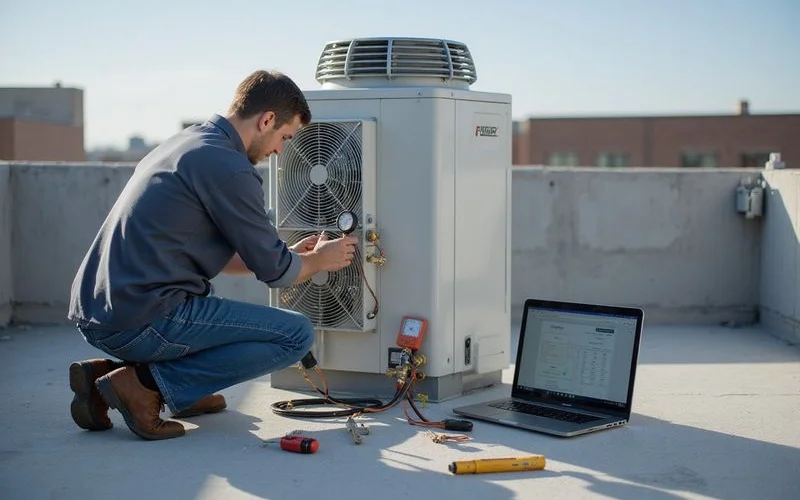
For a home, a day without aircon is uncomfortable. For a business, especially one with customer-facing space, a server room, or temperature-sensitive stock, downtime can mean lost revenue or damaged goods. This changes what to prioritise when choosing a contractor: response time for a breakdown callout and willingness to schedule around business hours often matter as much as price.
What to compare across quotes
| Factor | Why it matters for a business |
|---|---|
| Experience with your specific system type | VRV/VRF and chiller systems need different expertise than residential split units |
| After-hours or weekend availability | Reduces disruption to operating hours or customer-facing areas |
| Response time for emergency callouts | Downtime cost is often higher for a business than a home |
| Maintenance contract options | Predictable scheduling and budgeting for multi-unit or multi-zone systems |
| Experience with your industry | F&B, healthcare, and server rooms each have different priorities, like hygiene or temperature stability |
Planning servicing around operations
Ask contractors whether they can work outside your operating hours, and how much notice they need to schedule that. For businesses that can’t tolerate any downtime, like a data room or a cold-chain storage area, ask specifically how the contractor handles servicing without shutting the system down completely, since some maintenance tasks can be staged to avoid a full outage.
Documentation matters more for businesses
Keeping a clear servicing record matters for a business in ways it doesn’t always for a home. If you’re leasing commercial space, your tenancy agreement may specify servicing obligations similar to residential rentals, and a paper trail protects you if a dispute comes up with your landlord. If you run equipment-sensitive operations, a servicing log also helps demonstrate due diligence if a cooling failure ever affects stock, equipment, or compliance requirements specific to your industry. Ask your contractor whether they provide a written report after each visit, not just a verbal summary, since this becomes useful documentation over time.
Choosing between a maintenance contract and ad hoc bookings
Given the higher usage and higher stakes of downtime, most commercial operators find a maintenance contract worth the commitment, since it keeps servicing on a predictable schedule rather than relying on someone remembering to book it. For a business with multiple units or zones, a contract also usually works out cheaper per visit than booking each one separately, the same trade-off homeowners weigh at a smaller scale.
Cost-saving looks different for a home unit than for a business. Our guide on affordable aircon servicing in Singapore without cutting corners covers the residential side of that question.
Questions worth asking before you sign a contract
Ask how the contractor handles a breakdown outside scheduled visits, whether that’s included in the contract or billed separately, since an unplanned outage is often the moment a business feels the cost of a gap in coverage most. Ask about their experience with your specific building type too, a shopping mall unit, a warehouse, and a multi-storey office tower each present different access and system challenges, and a contractor who’s worked in similar spaces before tends to move faster and run into fewer surprises.
See our methodology page for how we score commercial and industrial contractors, and browse the home page to compare listed businesses in this category.
Frequently asked questions
- How is commercial aircon servicing different from residential?
- Commercial and industrial systems are often larger and more complex, sometimes VRV/VRF multi-zone systems or ducted setups covering a whole floor, and they usually run for longer hours. Servicing needs to account for higher usage and, often, the cost of downtime to the business.
- How often should a commercial system be serviced?
- More often than a typical home system in most cases, since longer daily runtime means faster dust and wear buildup. Many businesses use a maintenance contract with quarterly or more frequent visits rather than booking ad hoc.
- Can servicing happen outside business hours?
- Many commercial contractors offer after-hours or weekend servicing specifically to avoid disrupting operations. Ask about this when comparing quotes, since not every contractor offers flexible scheduling.
- Do commercial systems need a specialist, or will any aircon contractor do?
- Larger commercial and industrial systems, particularly VRV/VRF or chiller-based setups, benefit from a contractor with specific experience on that equipment type, not just general residential servicing experience.