
Haze season aircon care in Singapore
By Jacky Lee · Updated 2026-08-06
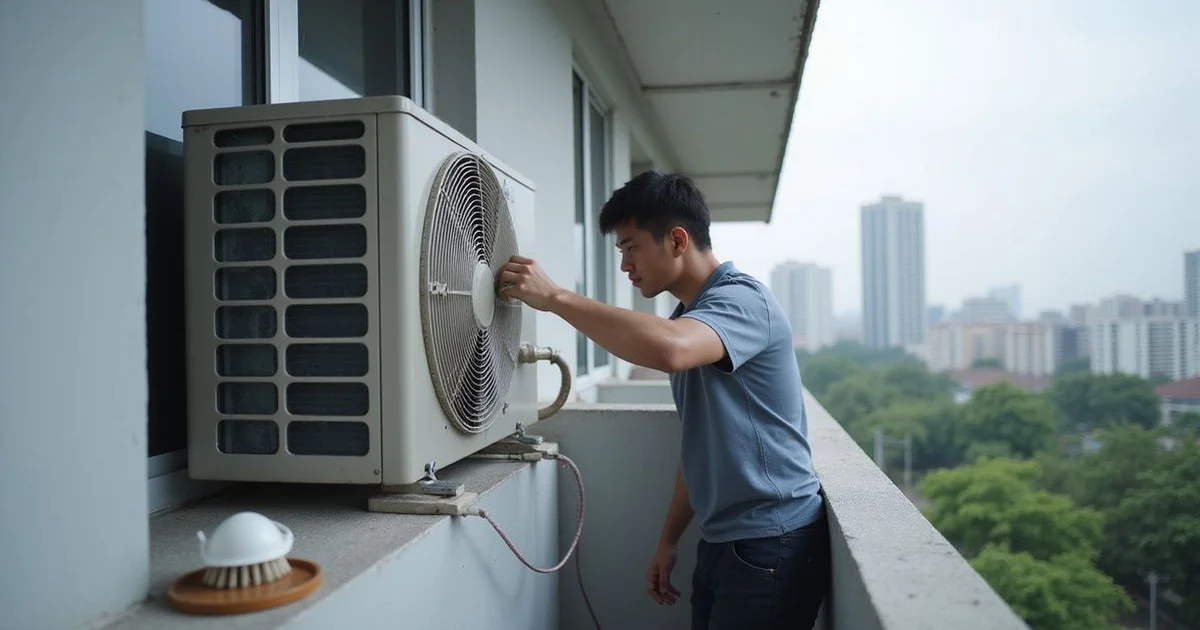
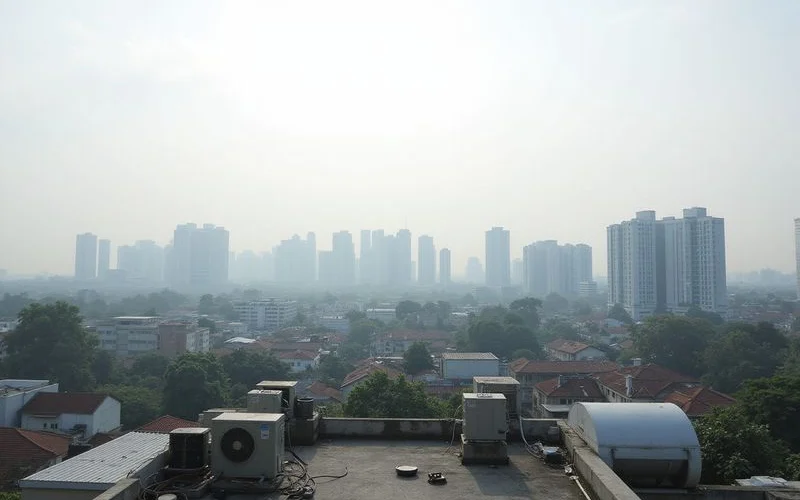
Singapore’s haze periods, usually linked to regional dry-season land and forest fires, bring more than just hazy skies. They add extra strain on your aircon’s filters and change how people use their units, since staying indoors with windows shut becomes the default when air quality outside drops.
Why haze matters for your aircon specifically
During a haze period, more airborne particulate matter is circulating outside, and some of it settles on the outdoor unit’s coil and gets drawn through the indoor filter. A filter that would normally last a few weeks between cleans can clog noticeably faster during a sustained haze stretch, which reduces airflow and makes the unit work harder to cool the same room.
What your aircon can and can’t do about haze
Standard aircon filters are built to catch larger dust and debris, not the fine particulate matter (PM2.5) that’s typical of haze. Running the aircon keeps a room cool and sealed from outdoor air, which is genuinely useful during haze since it reduces direct exposure, but it doesn’t meaningfully filter that fine particulate out of the indoor air on its own. If indoor air quality during haze matters to your household, particularly for anyone with asthma or respiratory sensitivity, a dedicated air purifier with a suitable filter rating alongside your aircon does more for fine particles than the aircon’s filter alone.
Before haze season arrives
Booking a service or filter clean ahead of the haze-prone months, typically later in the year, means your unit starts the period with a clean coil and filter rather than an already-clogged one. A unit that’s overdue for servicing copes worse with the extra particulate load, since it’s starting from a weaker baseline.
During a haze period
| Task | Why it helps |
|---|---|
| Clean or rinse the filter more often than usual | Prevents clogging from extra particulate load |
| Keep windows closed, rely on aircon for cooling | Reduces direct exposure to outdoor haze |
| Wipe down the outdoor unit’s accessible surfaces lightly | Reduces buildup on the coil intake, without opening the casing |
| Consider a standalone air purifier for fine particles | Aircon filters don’t meaningfully catch PM2.5 on their own |
| Watch for reduced cooling performance | Can signal the filter or coil needs attention sooner than scheduled |
Watching for signs your unit is struggling
A unit coping with a heavier-than-usual particulate load doesn’t always announce it clearly. Weaker airflow from the vents, a slightly musty smell as dust mixes with normal moisture on the coil, or the unit running longer than usual to reach the same temperature are all worth noticing during a haze stretch. None of these are emergencies on their own, but they’re a reasonable signal to check or clean the filter sooner than your normal schedule rather than waiting it out. If a unit stops cooling altogether or trips the breaker instead, that’s a different situation with its own steps: see our guide on aircon breakdown emergency: what to do first.
Multi-unit households and haze
If you have several indoor units across different rooms, they won’t necessarily clog at the same rate, since rooms facing prevailing wind directions or with less-sealed windows can draw in more particulate than others. It’s worth checking each unit individually during a sustained haze period rather than assuming that because one filter looks fine, the rest are too.
After haze season
Once the haze clears, it’s worth booking a proper check, especially if the period ran long. A coil that’s had a heavier-than-usual particulate load benefits from a professional look, even if the unit still seems to be cooling fine, since reduced airflow from a partially clogged coil isn’t always obvious day to day.
This is also a reasonable time to ask your contractor whether your current filter type is the best fit for your household. Some filters are designed to catch finer particles than the basic type that comes standard with most units, and while none fully replace a dedicated purifier for haze-level particulate, an upgraded filter can modestly reduce how often you need to clean between services during haze-heavy stretches.
For contractors who can help with a pre- or post-haze service, see our methodology page for how we score responsiveness and thoroughness, and browse the home page to compare listed contractors.
Frequently asked questions
- Does haze actually affect my aircon unit, or just outdoor air?
- Both. Haze particles settle on the outdoor unit's coil and can be drawn into the indoor filter faster than on a clear day, which means filters clog sooner and need more frequent attention during a haze period.
- Can my regular aircon filter remove haze particles from indoor air?
- Standard aircon filters mainly catch larger dust and debris, not the fine particulate matter typical of haze. If indoor air quality during haze is a concern, a dedicated air purifier alongside your aircon is more effective for fine particles.
- Should I clean my outdoor unit myself during haze season?
- Light dusting where safely accessible is fine, but avoid opening the unit yourself. If the outdoor coil looks heavily coated after a haze period, book a professional clean rather than attempting to clear it yourself.
- Should I service my aircon before or after haze season?
- Before, if possible. A clean filter and coil going into a haze period copes better with the extra particulate load than a unit that was already due for servicing.